

OUR BLOG
Non-Yellowing Repair Solutions for White Marble: Backed by UV Lab Data
Updated : 7 hours ago
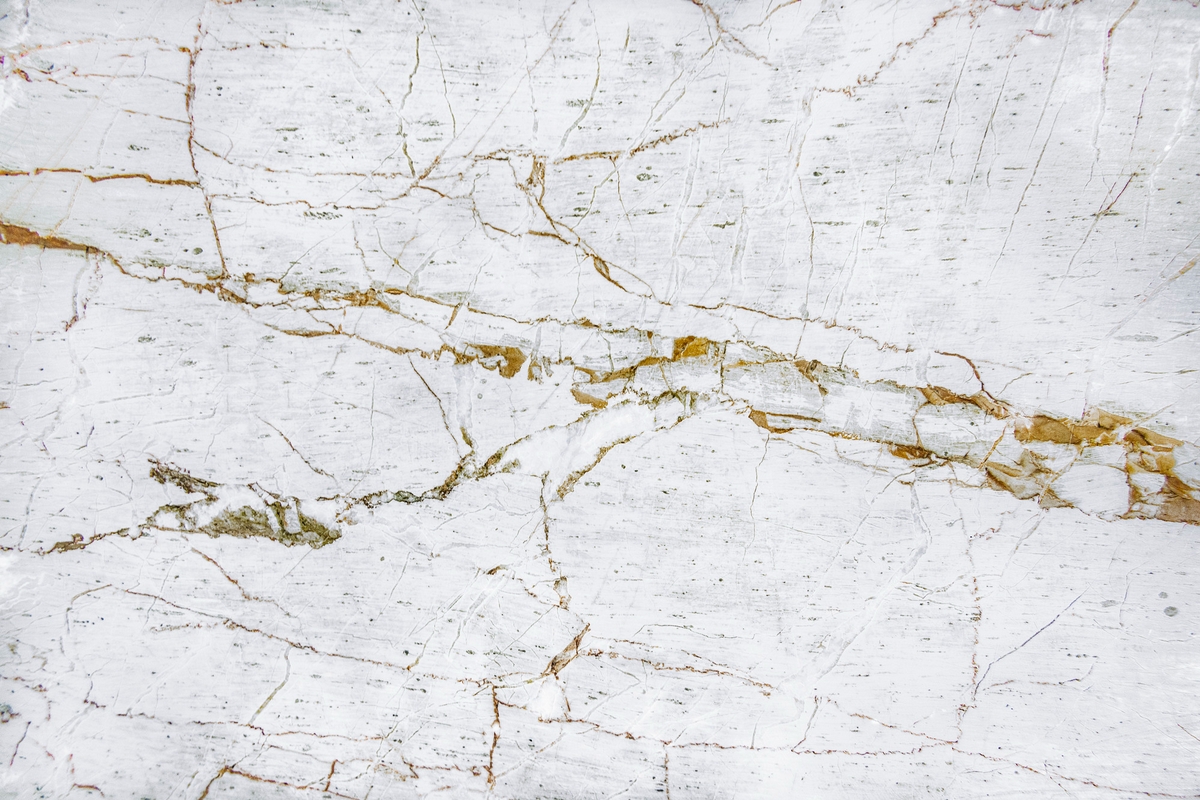
Nothing undermines a white marble installation faster than a joint or crack filling that starts to yellow. It rarely happens on day one - most standard aromatic epoxies look perfectly clear at installation, and only begin to discolour weeks or months later, once real UV exposure starts breaking the resin down from the inside. By the time the yellowing is visible, the only fix is a full rework.
This is one of the reasons white marble has a reputation as a difficult stone to install well - a theme we've covered in more depth in our White Marble Installation Methodology guide, where issues like joint bleeding, yellowing, and de-bonding come up again and again as the recurring failure points contractors run into. Choosing a non-yellowing epoxy for white marble from the outset is what separates an installation that looks flawless for years from one that needs revisiting within a season.
Aliphatic vs Aromatic Epoxy Chemistry
Why Standard Epoxies Yellow: The Molecular Reason
Most conventional epoxy resins are built on aromatic chemistry - resin structures containing benzene rings. Under UV exposure, these aromatic rings absorb light energy and undergo a process called chromophore formation: the molecular structure rearranges in a way that creates new light-absorbing groups within the cured resin. Visually, this shows up as a gradual amber-to-yellow shift, which is especially obvious against a bright white marble background.
Why Aliphatic-Based Systems Resist It
Aliphatic epoxy systems use resin chemistry without those UV-reactive aromatic rings. Because there's no benzene-ring structure to absorb UV energy and convert it into new chromophores, aliphatic resins are far more resistant to UV-induced yellowing. This is the underlying reason "non-yellowing" and "aliphatic" are used almost interchangeably when fabricators talk about UV resistant marble epoxy - the resin chemistry itself is what determines long-term colour stability, not just the initial clarity of the cured resin.
What UV Lab Testing Actually Measures
Claims of "non-yellowing" mean little without a testing methodology behind them. The standard approach used across the coatings and resin industry is QUV Accelerated Weathering Testing, generally run in line with ASTM G154 - a standard practice for operating fluorescent UV lamp apparatus to simulate long-term UV exposure in a compressed time frame.
In practice, cured resin samples are exposed to cycles of UV light and condensation inside a QUV chamber, and their colour shift is measured at intervals using a Yellowness Index (commonly calculated per ASTM E313). The result is a curve of yellowing index against hours of UV exposure - the flatter that curve stays, the more colour-stable the resin is over its real-world lifespan.
UV Exposure | Yellowing Index - Standard Aromatic Epoxy | Yellowing Index - Non-Yellowing Aliphatic System |
Unexposed | Baseline colour | Baseline colour |
Short-term outdoor/UV exposure | Begins to shift toward amber/yellow as aromatic rings photo-oxidize | Color remains essentially unchanged |
Extended outdoor/UV exposure | Yellowing becomes clearly visible, especially on white/light substrates | Retains near-original clarity and color stability |
Long-term outdoor/UV exposure | Pronounced yellowing/ambering, often requiring recoating on light-colored surfaces | Maintains stable appearance over time, suitable for exterior and light-colored applications |
RachTR's Non-Yellowing Systems for White Marble
RLE 31 - UV-resistant, non-yellowing resin system suited to resin-line crack and pinhole repair on white marble slabs.
MLE 35 - Bleeding-free and non-yellowing, MLE 35 also addresses joint darkening, a related but distinct failure mode where resin migrates and discolours the surrounding stone rather than yellowing in place.
GLE 33 - Primarily positioned for granite applications, but shares the same UV-resistant, non-yellowing chemistry, making it cross-compatible where a fabricator is already standardised on GLE 33 for mixed-stone workflows.
BLEEDX - A barrier coating that prevents joint-adhesive bleeding into white marble. While it isn't a yellowing-resistant resin itself, controlling bleed-through indirectly prevents one of the more common causes of visible joint discolouration.
Installation Best Practices to Preserve Non-Yellowing PerformanceEven the best non-yellowing resin chemistry can underperform if installation practices work against it:
Adhere strictly to the specified mix ratio. Deviating from the resin-to-hardener ratio changes the cured resin's chemistry and can compromise its UV stability, even with an inherently aliphatic system.
Control curing temperature. Curing outside the recommended temperature range can lead to incomplete cure, which affects both mechanical strength and long-term colour retention.
Avoid excess hardener "for faster cure." Adding extra hardener doesn't speed up curing safely - it disrupts the resin's stoichiometry and is a common, avoidable cause of premature yellowing and brittleness.
For a full breakdown of correct installation sequencing, see Installation Systems.
Conclusion
A non-yellowing epoxy for white marble isn't just a marketing claim - it comes down to the underlying resin chemistry (aliphatic vs. aromatic) and whether that chemistry is backed by real UV lab data. Combined with correct mix ratios and curing practice on-site, it's what keeps a white marble installation looking as clean five years in as it did on day one.
To request technical data sheets or lab reports for RachTR's non-yellowing resin systems, get in touch with our team.
FAQs
Why does epoxy turn yellow on white marble?
Most standard epoxies use aromatic resin chemistry, which contains benzene-ring structures that absorb UV light and form new light-absorbing compounds over time. This shows up as a gradual yellow discolouration, particularly visible against white marble's bright background.How long does non-yellowing epoxy stay clear?
This depends on the specific resin system's aliphatic chemistry and UV lab test results. Under accelerated QUV weathering, well-formulated non-yellowing systems maintain a stable Yellowness Index across extended exposure hours, though real-world performance should be confirmed against the manufacturer's actual lab data.What test proves an epoxy is UV stable?
QUV Accelerated Weathering Testing, typically run per ASTM G154, alongside Yellowness Index measurement per ASTM E313, is the standard industry approach for evaluating a resin's UV stability over simulated long-term exposure.

60 views
60
0 comments
0
Recent Posts
See All.jpg)
.jpg)
.jpg)

GET IN TOUCH
RachTR Chemicals Private Limited, 4th Floor, Unit No 413/414, Spaze Boulevard, Above Kia Showroom, Sector 47, Gurgaon - 122018
© 2024 RachTR. All Rights Reserved.


Comments