
OUR BLOG
Why Pharmaceutical Industries Prefer Epoxy Flooring: Here’s The Math
Updated : 1 month ago
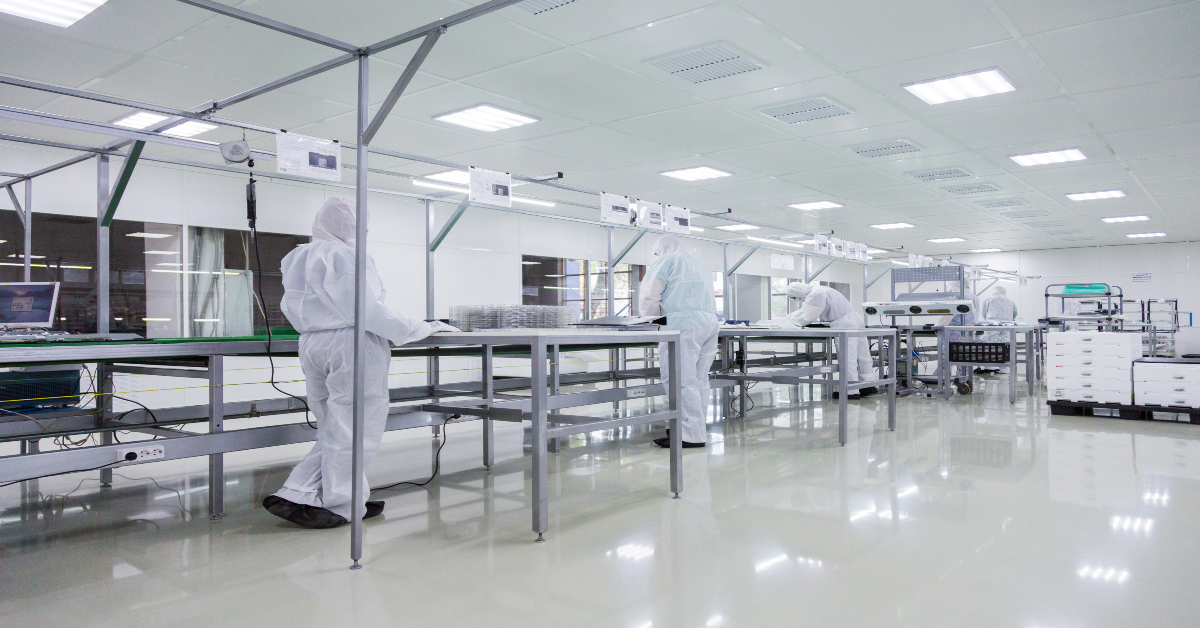
Epoxy Flooring is considered to be the best and most preferred flooring alternative, especially for the pharmaceutical industry. There’s not just one reason but many. There is zero room for dust, germs, and pollutants at a pharma plant. Epoxy flooring repels dust and is easy to clean, which puts a halt to microbial growth. All these factors make epoxy flooring the best choice for the pharmaceutical industry.
Epoxy: Understanding the chemistry
Epoxy is a special glue that starts as a liquid but turns into hard plastic! It happens when you mix two things: the epoxy liquid and a "hardener." Once mixed, they lock together into a super strong, solid material that never melts again.
Inside the epoxy liquid are tiny rings made of two carbon atoms and one oxygen atom, called "epoxide rings." These rings are squeezed really tight, like a rubber band stretched too far. Because they're so tense, they love to pop open and grab onto other molecules — that's what makes epoxy so good at sticking and hardening!
1. More shine. More light.
After the epoxy coating dries, it shines more. This brings a great sense of visual clarity, a sense of neatness just apt for pharmaceutical plants.
2. Simply long-lasting
The strongly-bonded polymers are tougher than we can imagine. Their durability lasts for years to come, resulting in happy customers.
3. Easy-to-clean
Cleanliness is paramount in the pharmaceutical industry. The pharma industry needs easy-to-clean surfaces like Epoxy Flooring that has no gaps and no joints.
4. Chemical-resistant
Composed of resins and hardeners, the final chemical bond formed is too impervious for the chemicals; hence, toxins and other harmful substances can’t get in. This makes epoxy flooring chemical-resistant and perfect for the pharmaceutical industry.
5. Safety-first factor
The epoxy flooring comfortably resists impact, slip, heat, and fire. These factors make it a safe alternative for flooring the pharma domain.
6. Colour-divided regions
Since there is a plethora of shades available in epoxy flooring, it becomes a hassle-free job to demarcate areas and designate them for varied purposes, including foot traffic, machinery, and other jobs.
Conclusion
All of the above factors combined make epoxy flooring the number one choice for the pharma industry. Trusted names like RachTR provide both chemicals and execution services for epoxy flooring, allowing you to order the services and turn the key after project completion. You can comfortable sit back and relax while RachTR epoxy flooring services do the job.
FAQs
1. Why is epoxy flooring recommended for pharmaceutical facilities?
Pharma floors must resist oils, acids, solvents, and heavy equipment traffic while staying free of dust and allergens. Epoxy resin combines with hardening agents to form a tightly cross-linked, seamless surface with no crevices for bacteria to hide in. As RachTR delivers this on a turnkey basis, clients get a floor engineered to these standards without having to coordinate resin selection, hardener chemistry, or application separately.
2. What does "turnkey" mean when RachTR handles the epoxy flooring project?
It means RachTR manages the entire scope — site assessment, substrate preparation, self-leveling application (typically 2mm+ thickness), curing, and handover — as a single accountable package. Since epoxy installation is a self-leveling process, a turnkey approach avoids the coordination gaps that occur when multiple contractors handle material supply and installation separately.
3. How does epoxy flooring improve safety and workflow in a pharma plant?
Epoxy surfaces offer resistance to impact, slip, heat, and fire, and their high-gloss finish can boost workspace brightness significantly. The wide color range also lets facilities mark out forklift lanes, safety zones, and designated work areas clearly. With RachTR's turnkey execution, these safety and zoning requirements can be planned into the color/finish scheme upfront rather than retrofitted later.
4. Is epoxy flooring cost-effective compared to conventional flooring for pharma use?
Yes — epoxy resists wear and tear far better than conventional flooring, which cuts long-term maintenance costs. RachTR's turnkey model adds to these savings by bundling material, labor, and project management under one cost structure, reducing coordination overhead and rework risk.
5. How soon can a pharmaceutical facility be operational after epoxy floor installation?
Because epoxy is a self-leveling system, professional application is relatively fast, saving productive time versus other flooring methods. As a turnkey provider, RachTR can give clients a single project timeline covering surface prep through final cure, rather than the client having to sequence multiple vendors' schedules independently.

60 views
60
0 comments
0
Recent Posts
See All.jpg)
.jpg)
.jpg)
GET IN TOUCH
RachTR Chemicals Private Limited, 4th Floor, Unit No 413/414, Spaze Boulevard, Above Kia Showroom, Sector 47, Gurgaon - 122018
© 2024 RachTR. All Rights Reserved.


Comments