

OUR BLOG
Water-Based vs Solvent-Based Stone Sealers
Updated : 2 months ago
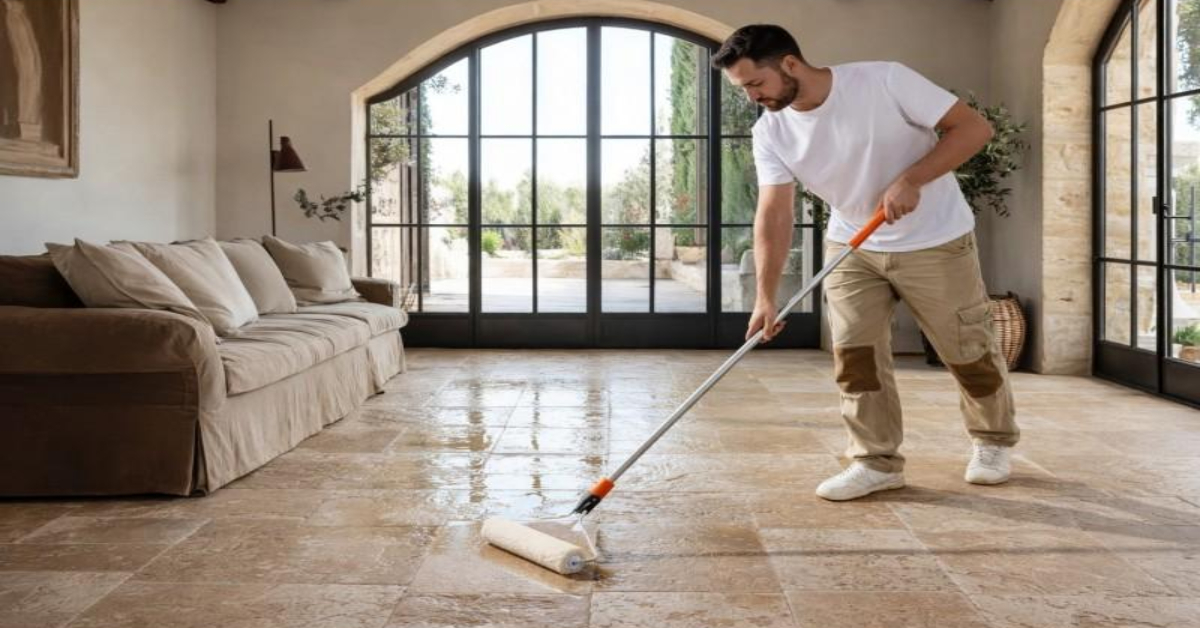
Natural stone is porous by nature - marble, granite, sandstone, and limestone all have microscopic pores that let water, oil, and stains seep in over time. This is where marble sealers come in. A sealer is a protective treatment applied to the stone's surface or into its pores that blocks moisture and contaminants from penetrating, while helping the stone resist staining, etching, and weathering. The core function is simple: keep what's outside (water, oil, grime) out, without changing how the stone looks or breathes. But not all sealers work the same way - and the biggest decision point for any installer or homeowner is choosing between a water-based and a solvent-based formulation.
Water-Based Sealers
Water-based sealers use water as the primary carrier for the protective resins, rather than chemical solvents. Once applied, the water evaporates, leaving behind a thin impregnating layer inside the stone's pores.
Advantages:
Low odor and safer application - since there's no solvent off-gassing, they're easier to use indoors and in occupied spaces.
Breathable finish - water-based sealers typically allow the stone to still "breathe," reducing the risk of trapped moisture and efflorescence.
Economical - they're generally more budget-friendly, making them a practical choice for large-area residential or light commercial projects.
Easy maintenance - reapplication and touch-ups are usually simpler compared to solvent-based systems.
They work especially well on more porous, absorbent substrates like sandstone, brick, and cement-based surfaces, where deep penetration matters more than a glossy finish.
Solvent-Based Sealers
Solvent-based sealers use organic solvents as the carrier instead of water. This allows the active resins to penetrate deeper and bond more aggressively with dense stone surfaces, often forming a topical or semi-topical protective film.
Advantages:
Deeper penetration on dense stones - particularly effective on granite and sandstone, where water-based products may struggle to penetrate fully.
Enhanced color and "wet look" finish - solvent-based sealers tend to enrich and darken stone color, giving a rich, natural, glossy appearance that's popular for exterior cladding and flooring.
Stronger resistance to UV and weathering - many formulations are specifically built to resist sun exposure without yellowing, making them suited for outdoor or exposed installations.
Longer durability in harsh conditions - the deeper bond generally translates to a longer protective lifespan under heavy exposure.
Performance of Water-Based and Solvent-Based Sealers in Different Climates
Climate plays a bigger role in sealer performance than most people realize.
Humid or monsoon-prone regions: Water-based sealers that preserve breathability help prevent moisture from getting trapped beneath the surface, reducing efflorescence risk. However, in extremely wet conditions, a solvent-based topical barrier can offer stronger short-term water resistance.
Hot, sun-exposed climates: Solvent-based, UV-resistant sealers hold up better against prolonged sun exposure without breaking down or yellowing, making them the preferred choice for outdoor flooring, facades, and cladding.
Coastal or high-pollution urban areas: Solvent-based sealers with strong oleophobic (oil-repelling) properties tend to perform better against airborne grime and pollutants sticking to the stone surface.
Moderate, indoor-controlled environments: Water-based sealers are usually sufficient, offering good protection without the stronger chemical odor of solvent-based systems - ideal for homes, offices, and retail interiors.
Conclusion
There's no single "better" option between water-based and solvent-based sealers - the right choice depends on the stone type, the installation environment, and the climate it'll face. RachTR's Protection Systems range is built to cover both ends of that decision:
For an economical, water-based option with reliable impregnating protection, RachTR SS Sealer is designed for porous substrates like sandstone, brick, and cement surfaces, giving long-lasting hydrophobic protection without altering the stone's natural look.
For surfaces that need a richer, enriched finish with strong UV resistance, RachTR WL Barrier is a solvent-based topical sealer that gives stone a natural wet look while protecting against water and oil-based stains - especially suited for granite and sandstone exteriors.
For all-round premium protection, RachTR Top Seal is a nano-impregnating, UV-resistant sealer offering ultimate defense against water, oil, and stains, while RachTR Defendor is a more economical nano-impregnating alternative, ideal for porous stones and grout lines in high-traffic or outdoor installations.
And where the goal is to intensify and deepen the stone's natural color - particularly for dark-colored marble - RachTR Color Enhancer penetrates into the micropores, delivering both protection and a richer aesthetic finish.
Matching the right RachTR sealer to your stone type and climate is the simplest way to protect natural stone surfaces for years, without compromising on how they look or perform.

60 views
60
0 comments
0
Recent Posts
See All

GET IN TOUCH
RachTR Chemicals Private Limited, 4th Floor, Unit No 413/414, Spaze Boulevard, Above Kia Showroom, Sector 47, Gurgaon - 122018
© 2024 RachTR. All Rights Reserved.


Comments