

OUR BLOG
Why Moisture Content Matters in Natural Stone Installation
Updated : 2 months ago
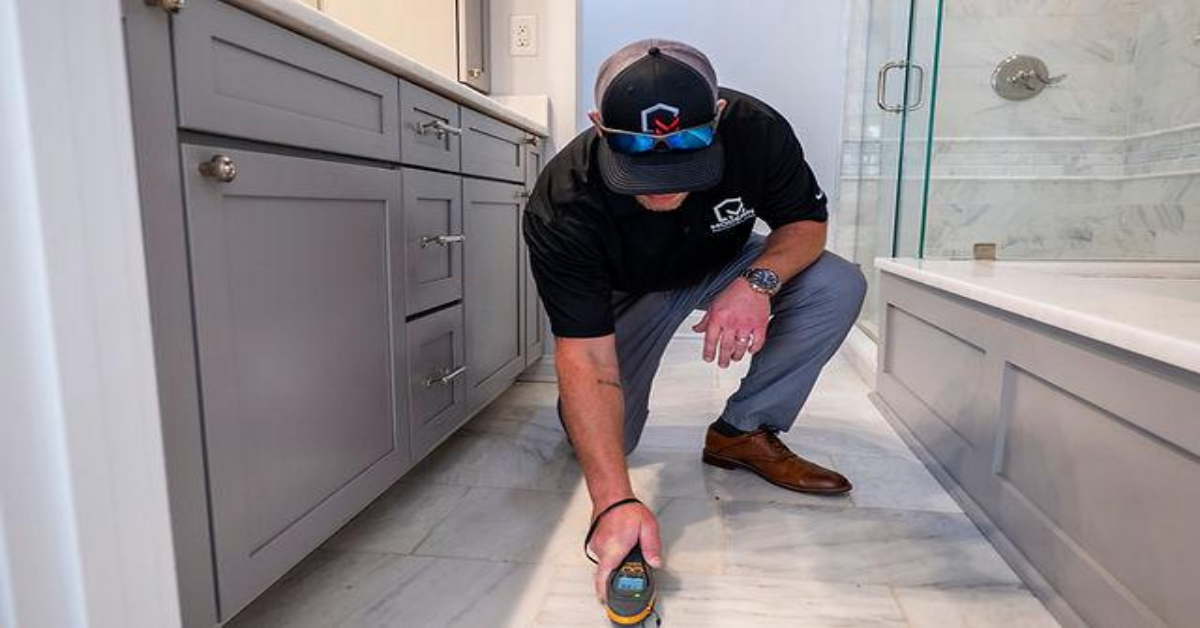
Natural stone has been used in construction for centuries, but its natural origin is exactly what makes natural stone installation tricky. Marble, granite, sandstone, and limestone are all formed differently, and each carries a different capacity to absorb and hold moisture. Get this wrong, and even the best tile adhesive or marble adhesive won't save the installation.
Understanding porosity is the starting point. Marble and limestone, being sedimentary or metamorphic with finer pore structures, tend to absorb water more readily. Granite, a dense igneous rock, is far less porous and dries faster. Sandstone sits somewhere in between, with variable porosity depending on its grain structure. This difference matters because moisture doesn't just sit on the surface - it travels through the stone from the quarry, through cutting and polishing, into transport, and finally to the job site. If that trapped moisture isn't accounted for before installation, it becomes a long-term liability.
How Moisture Affects Adhesive Bonding
Weak Bond Formation and Adhesion Failure
When a stone slab holds excess moisture, it interferes with the adhesive's ability to properly key into the surface. Cement-based adhesives for tiles rely on controlled hydration to form a strong mechanical and chemical bond - too much ambient moisture in the stone disrupts this balance and results in a weak, unreliable bond.
Efflorescence and Staining Risks
Excess moisture trapped beneath the stone often finds its way to the surface, carrying dissolved salts with it. This shows up as white, chalky efflorescence or unsightly staining - a common complaint, especially with marble adhesives used on light-colored or white stone.
Delamination and Lippage Over Time
Moisture-related bond failure doesn't always show up on day one. Over months, uneven moisture retention can cause sections of stone to lift, delaminate, or sit unevenly (lippage), especially in high-traffic commercial areas.
Curing Delays in Cement-Based vs. Resin-Based Adhesives
Cement-based tile adhesives need moisture to cure, but too much of it - especially locked inside the stone - extends curing time and weakens final strength. Resin-based or epoxy systems behave differently; they're less dependent on ambient moisture but can still suffer from adhesion issues if the substrate is wet enough to interfere with resin penetration.
Ideal Moisture Content Levels for Different Stone Types

These figures are general guidelines; always cross-check with the specific quarry batch and adhesive manufacturer's technical data sheet before installation.
How to Test Moisture Content Before Installation
Moisture Meters (Pin vs. Pinless)
Pin-type meters measure resistance between two probes inserted into the stone, giving a direct reading but leaving small punctures. Pinless meters use electromagnetic sensors to scan moisture non-invasively, making them better suited for finished or polished stone surfaces where marking isn't acceptable.
Calcium Carbide Test
This is one of the most reliable on-site methods, especially for substrate moisture testing. A sample is crushed and sealed with calcium carbide reagent in a pressure vessel - the resulting pressure reading converts directly to a moisture percentage. It's more involved than a meter reading but delivers lab-grade accuracy on-site.
Visual/Manual Checks
Simple checks - feeling for coolness or dampness, or looking for dark patches - can flag obvious problems, but they're not reliable enough to base an installation decision on. Use them only as a preliminary screen, not a final verdict.
Choosing the Right Adhesive Based on Moisture Conditions
Not every tile adhesive or marble adhesive performs the same way under moisture stress:
Cement-based adhesives are cost-effective and widely used but are more sensitive to substrate and stone moisture - best reserved for stable, low-moisture environments.
Epoxy-based systems offer far better resistance to moisture-related failure, along with superior chemical and stain resistance - ideal for wet areas, exteriors, and stones prone to staining like white marble.
Polymer-modified adhesives strike a middle ground, offering improved flexibility and moisture tolerance over standard cementitious formulations, without the cost premium of full epoxy systems.
For high-moisture zones or urgent turnaround projects, moisture-tolerant or rapid-set formulations reduce the risk window between application and full cure.
Best Practices to Prevent Moisture-Related Adhesive Failures
Proper stone storage and acclimatization: Store slabs and tiles in dry, ventilated conditions and allow them to acclimatize to site temperature and humidity before installation.
Substrate moisture testing: Always test the substrate - not just the stone - using a calcium carbide test or moisture meter before applying any adhesive.
Correct primer/sealer use: Applying the right primer or sealer before bonding helps control moisture migration between the substrate and the stone, especially critical for porous stones like marble and limestone.
Key Takeaways
Moisture is one of the most overlooked variables in natural stone installation and one of the most damaging when ignored. Testing before you install isn't optional; it's the difference between a floor that lasts decades and one that needs costly rework within a year.
This is exactly where RachTR's adhesive range is built to perform. For interior fixing of tiles and natural stone where moisture conditions are controlled, RachTR TSA ECO offers a reliable, polymer-modified cementitious base. For projects spanning interior and exterior applications - where moisture exposure is less predictable - RachTR TSA ECO+ and RachTR TSA ST provide higher resilience for large-format tiles and stones. In demanding conditions with deformable or high-moisture substrates, RachTR AdFlex 206, a two-component PU-modified flexible adhesive, delivers strong adhesion even on absorbent and non-absorbent surfaces alike. And for joint filling on moisture and stain-prone white or light-colored marble, RachTR Epoxy 201 G and RachTR R 105 THIXO offer the resistance that standard grouts can't match.
Choosing the right RachTR system based on your stone type and moisture profile is the simplest way to avoid bond failure, efflorescence (white, powdery or crystalline salt deposit), and delamination and to install natural stone that stays flawless for years.

60 views
60
0 comments
0
Recent Posts
See All

GET IN TOUCH
RachTR Chemicals Private Limited, 4th Floor, Unit No 413/414, Spaze Boulevard, Above Kia Showroom, Sector 47, Gurgaon - 122018
© 2024 RachTR. All Rights Reserved.


Comments