

OUR BLOG
Specific Crack Repair Systems for Specific Marbles: A Stone-by-Stone Guide
Updated : 10 hours ago
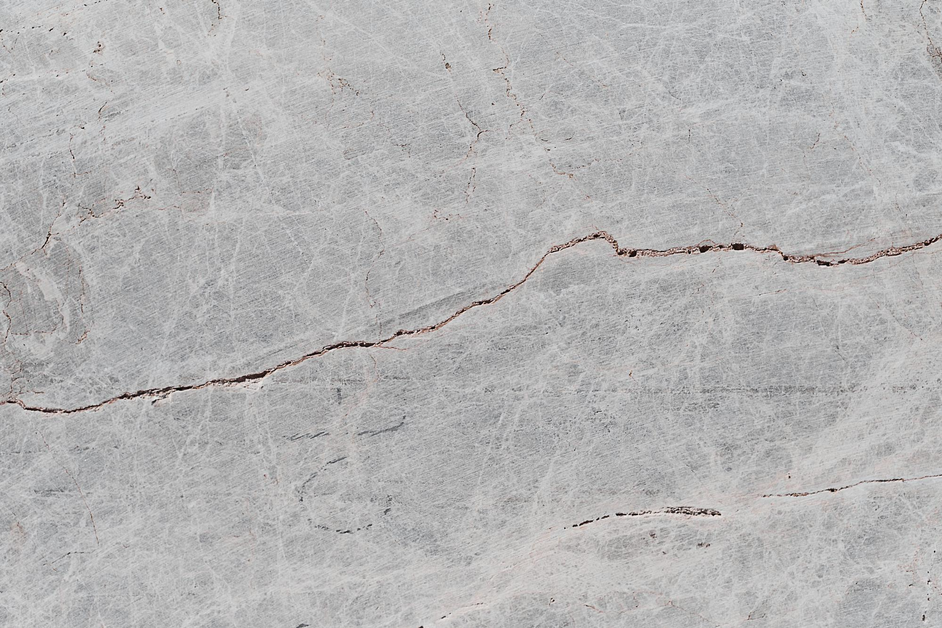
Ask a fabricator which epoxy they use for crack repair, and you'll often get one answer - regardless of whether the slab on the line is a translucent Statuario or a heavily veined Emperador. But a crack repair system for marble types isn't a one-size-fits-all decision. Each stone's porosity, crystal structure, colour sensitivity, and vein density calls for a different balance of viscosity, bond strength, and colour stability. This guide breaks down which RachTR resin system fits which marble - and why.
Why "One Epoxy Fits All" Doesn't Work for Marble
Marble isn't a single material with consistent properties - it's a category that spans everything from bright, translucent white stones to dense, dark, coarsely-crystalled varieties. Three variables in particular determine whether an epoxy is actually the right match for a given stone:
Porosity and crystal structure - denser marbles absorb less resin and need less penetration; more porous or fissured stones need deeper wetting to fill fully.
Colour sensitivity - light, translucent marbles show any yellowing or joint darkening immediately, while darker stones can tolerate resins that would be visually unacceptable on a white slab.
Vein density and crack geometry - fine hairline veining calls for low-viscosity, deep-penetrating resin, while larger voids and fissures need a system that can fill and hold without excessive drip.
The result is a simple but important split in priorities: white and light marbles (Statuario, Calacatta) prioritise non-yellowing, colour-neutral chemistry above all else, while darker or heavily veined marbles (Emperador, Botticino) prioritise flow characteristics and bond strength, since colour-matching is a smaller concern. For the full range of systems referenced below, see RachTR's Resin Line & Crack Repairing Systems hub.
Key Factors That Determine the Right Epoxy for a Marble Type
Factor | What to Consider |
Porosity & Absorption Rate | Dense marbles need less resin penetration; porous marbles need deeper wetting to fill pinholes fully. |
Viscosity Needed | Low viscosity for fine pinholes and hairline veins; medium viscosity for larger cracks and voids. |
Colour Sensitivity | White/translucent marbles (Statuario, Calacatta) demand non-yellowing, bleeding-free chemistry; darker marbles have more tolerance. |
Application Method | Automated resin-line systems suit high-volume, consistent processing; manual systems suit precision, slab-by-slab repair. |
Marble-by-Marble Recommendations
White & Statuario/Calacatta-type marbles (high whiteness, translucent veining) Priority: non-yellowing, bleeding-free, low-to-medium viscosity.
RLE 31 - UV-resistant, non-yellowing, medium viscosity; suited to resin-line application on high-whiteness stone.
MLE 35 - Bleeding-free, prevents joint darkening; the standard choice for manual crack filling on Statuario and Calacatta.
Fine-pinhole / micro-porous white marbles Priority: deep penetration, low viscosity.
RLE 21 - Low-viscosity system with excellent substrate wetting, built to reach fine pinholes that medium-viscosity resins can't fully penetrate.
Structurally weak or heavily fissured slabs (book-matched/fragile marbles) Priority: reinforcement, not just filling.
NE 25 - Fibre-net support system with fast curing and UV resistance, for slabs that need structural reinforcement alongside cosmetic repair.
Standard commercial-grade marbles (general crack/pinhole repair)
RLE 25 - Medium-viscosity, general-purpose system for everyday commercial-grade repair work.
MLE 33 - Manual repair system with a precise 100:33 resin-hardener ratio, suited to fabricators who need tight control over cure characteristics.
Granite and darker/coarser stones (for readers working across mixed granite-marble projects) RachTR's resin range extends beyond marble - GLE 33, GLE 34, and GLE 25 are formulated for granite and coarser stone types, worth a look if your production line handles both marble and granite.
Resin-Line vs Manual-Line vs Netting Systems - Which Process Fits Your Marble
RachTR's crack repair range is organised around three application categories, and matching the right category to your slab condition matters as much as picking the right product within it:
Resin Line systems - Designed for automated, continuous application as part of a production line. Best suited to high-volume processing where consistency across every slab matters, and where slabs are structurally sound enough for standard automated handling.
Manual Line systems - Applied by hand, giving the operator direct control over precision crack filling, vein-matching, and colour blending on individual slabs - the right choice when each repair needs to be evaluated and treated on its own.
Netting (fibre-net) Epoxy systems - Combine resin with a mesh backing, used specifically where the slab itself is structurally compromised - heavily fissured or fragile book-matched stone that needs reinforcement, not just a cosmetic fill.
Comparison Table: Product, Viscosity, Best-Suited Marble, Key Property
Product | Viscosity | Best For | Non-Yellowing? | Notes |
RLE 21 | Low | Fine-pinhole, micro-porous white marbles | Yes | Excellent substrate wetting/deep penetration |
RLE 25 | Medium | Standard commercial-grade marbles | - | General-purpose crack/pinhole repair |
RLE 31 | Medium | White & Statuario/Calacatta-type marbles | Yes | UV-resistant; suited to resin-line application |
MLE 33 | - | Standard commercial-grade marbles | - | Manual repair; precise 100:33 resin-hardener ratio |
MLE 35 | - | White & Statuario/Calacatta-type marbles | Yes | Bleeding-free; prevents joint darkening |
NE 25 | - | Structurally weak/fissured, book-matched slabs | Yes | Fibre-net support system; fast curing |
Application Tips When Matching Epoxy to Marble Type
Test on an offcut first - Always trial the resin on a scrap piece of the same batch before committing to the visible slab, since colour match can vary slightly between stone lots.
Match cure time to your handling schedule - A fast-curing system that fits an automated line's throughput may not suit a manual repair workflow where slabs need longer inspection time before moving on.
Don't over-thin low-viscosity systems for large voids - Low-viscosity resins are built for fine penetration, not bulk fill; using them on larger cracks or voids can lead to excessive shrinkage and an under-filled repair.
Conclusion
Matching the right crack repair system to the right marble type isn't a minor detail - it's the difference between a repair that disappears into the stone and one that becomes a visible, permanent flaw. Whether you're working with translucent Statuario, heavily veined Emperador, or a structurally fragile book-matched slab, RachTR's resin range is built around these stone-specific requirements.
For help matching the right product to your specific marble and application, get in touch with our team for a product-matching consultation, or explore the full range at Stone Processing Industry.
FAQs
Which epoxy is best for white marble cracks?
For white and translucent marbles like Statuario and Calacatta, non-yellowing, bleeding-free systems such as RLE 31 (resin-line) or MLE 35 (manual repair) are the standard choice, since colour stability is the top priority on these stones.
Can the same epoxy be used on marble and granite?
Some resin chemistries are cross-compatible, but marble and granite have different porosity and mineral characteristics, so it's generally best to use products formulated for each - RachTR's GLE series for granite and the RLE/MLE/NE range for marble.
What's the difference between resin-line and manual-line crack repair?
Resin-line systems are designed for automated, continuous application on a production line, prioritising consistency at volume. Manual-line systems are hand-applied, giving the operator precise control over individual crack filling and colour matching, better suited to slab-by-slab repair work.
How do I know if my marble needs a low or medium viscosity epoxy?
It comes down to the size of what you're filling - fine pinholes and hairline veins need a low-viscosity resin that can penetrate by capillary action, while larger, more defined cracks need a medium-viscosity system that can fill and hold without excessive drip or shrinkage.

60 views
60
0 comments
0
Recent Posts
See All

GET IN TOUCH
RachTR Chemicals Private Limited, 4th Floor, Unit No 413/414, Spaze Boulevard, Above Kia Showroom, Sector 47, Gurgaon - 122018
© 2024 RachTR. All Rights Reserved.


Comments